Ireland and The Slave Trade

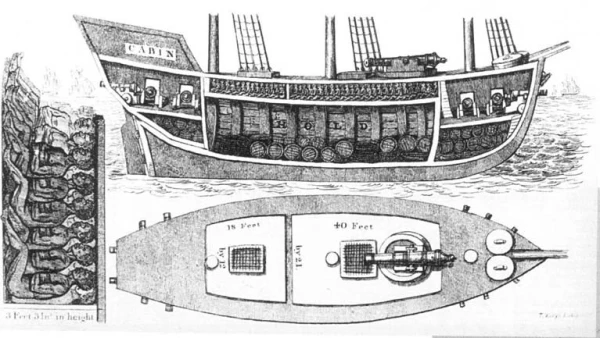
In Ireland we’re more familiar with thinking of ourselves as the victims of history – which we were – than as active participants in colonialism. But it’s an uncomfortable fact that the Irish were also slave owners, slave traders, overseers and agents. We helped build the slave empire on behalf of Britain, France and other countries, and shared in the profits of this horrendous system over the course of several hundred years. 

Talking to historians, academics and writers, producer Bairbre Flood traces the history of Irish involvement in the Atlantic Slave Trade, and examines some of the research in this area.

‘Ireland & The Slave Trade’ also looks at the anti-slavery movement at the time – and especially the visit of Frederick Douglass; the myth of the ‘white Irish slaves’ still doing the rounds on social media; and the growth of racism as a way of legitimising the enslavement of millions of African men, women and children.

Interviewees:

Orla Power, author of Irish planters, Atlantic Merchants: The Development of St. Croix, Danish West Indies, 1750-1766, and numerous academic papers and articles on this subject.

Joe O’Shea, journalist and author of Murder, Mutiny, Mayhem:The Account of The Blackest-Hearted Villains From Irish History, O’Brien Press, (2012).

Nini Rodgers, historian, retired lecturer from Queen’s University, Belfast, and author of Ireland, Slavery and Anti-Slavery: 1645-1865, Palgrave Macmillan; 2007.

Kate Hodgson, lecturer in University College Cork in the areas of Francophone postcolonial literature and culture, slavery, abolition and the law, and contemporary French politics and society. Co-editor of Slavery, Memory and Identity: National Representations and Global Legacies, London: Pickering & Chatto, (2012)

Dr Ebun Joseph, lecturer in the first Black Studies Module to be taught in Ireland at University College Dublin, social activist, and co-editor of Challenging Perceptions of Africa in Schools –  Critical Approaches to Global Justice Education, Routledge, 2020.

Lee Jenkins, head of the Dept. of English in UCC, co-editor of Atlantic Crossings in the Wake of Frederick Douglass, Brill, 2017, and author of ‘Beyond the Pale: Frederick Douglass in Cork’, in The Irish Review, 24, 1999.
More from this show

Saffron Kitchen Project

Καλωσόρισμα, Marhaben, salam, bienvennu, bemvindo, to the Gekko podcast. Created in collaboration with Hend, Hannah, Pedro, Alhamma, Nara, Maria and Amir during a series of podcasting workshops at Gekko School, Better Days, Athens, this piece visits Saffron Kitchen Project. pic by: Hadley Jackson ‘So the purpose of the project is not only to provide food but to use food as a tool for people to...

Tumaini

Tumaini (‘hope’ in Swahili) Festival is a unique refugee-led celebration of music, culture and solidarity in Dzaleka Refugee Camp, Malawi. Founded by Tresor Mpauni, who lived in the camp after being forced to leave the Democratic Republic of Congo, it uses arts and culture to build connections between refugees and the host community in Malawi. Beanca pic: courtesy of Tumaini Festival LISTEN on...

Jewish Ireland

An exploration of Jewish Irish history and culture – from Deli 613, to the Irish Jewish Museum: historians, musicians and Jewish groups and individuals share different aspects of modern Jewish culture in Ireland. ‘Jews have been here since the time of the Normans. Jews are not strangers here, but they remain to be othered in a lot of ways. And that, to me, is very interesting. Why, after a...

Athens

\ \  ATHENS  / / Created by participants during podcast workshops at the One Happy Family community centre, Athens – this piece on the theme of compassion. In English and Farsi.

LISTEN HERE

Undocumented

2022 saw the start of a groundbreaking regularisation scheme for thousands of people who’ve been living and working in Ireland for many years without papers. It came after ten years of campaigning by migrant communities working with the Migrant Rights Centre Ireland (MRCI) in the ‘Justice for Undocumented’ campaign. ‘We know the life – it wasn’t easy,’ said Irene Jagoba. ‘We’re hoping...

Silence Would Be Treason

Silence Would Be Treason are the last writings of Ken Saro-Wiwa from prison in Nigeria to an Irish nun in the run up to his execution in November 1995. Smuggled out of prison in bread baskets, they are the final testament of a man who gave everything he had in the struggle for social and ecological justice. As Ken Saro-Wiwa continues to inspire people and movements across decades and continents...

Bairbre Flood

Menu