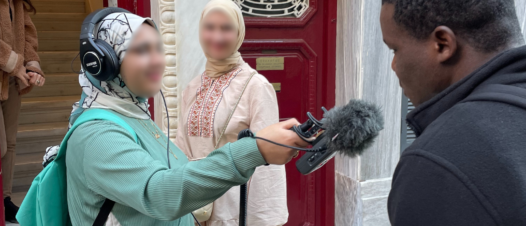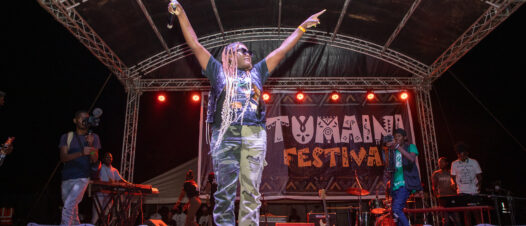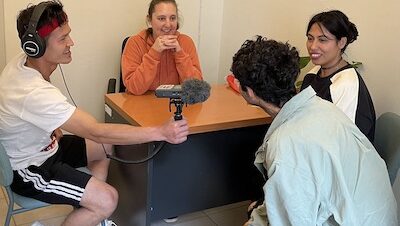
Radio documentary produced by Caroline Mudingo Dipanda and Bairbre Flood in collaboration with members of the migrant community in Cork.
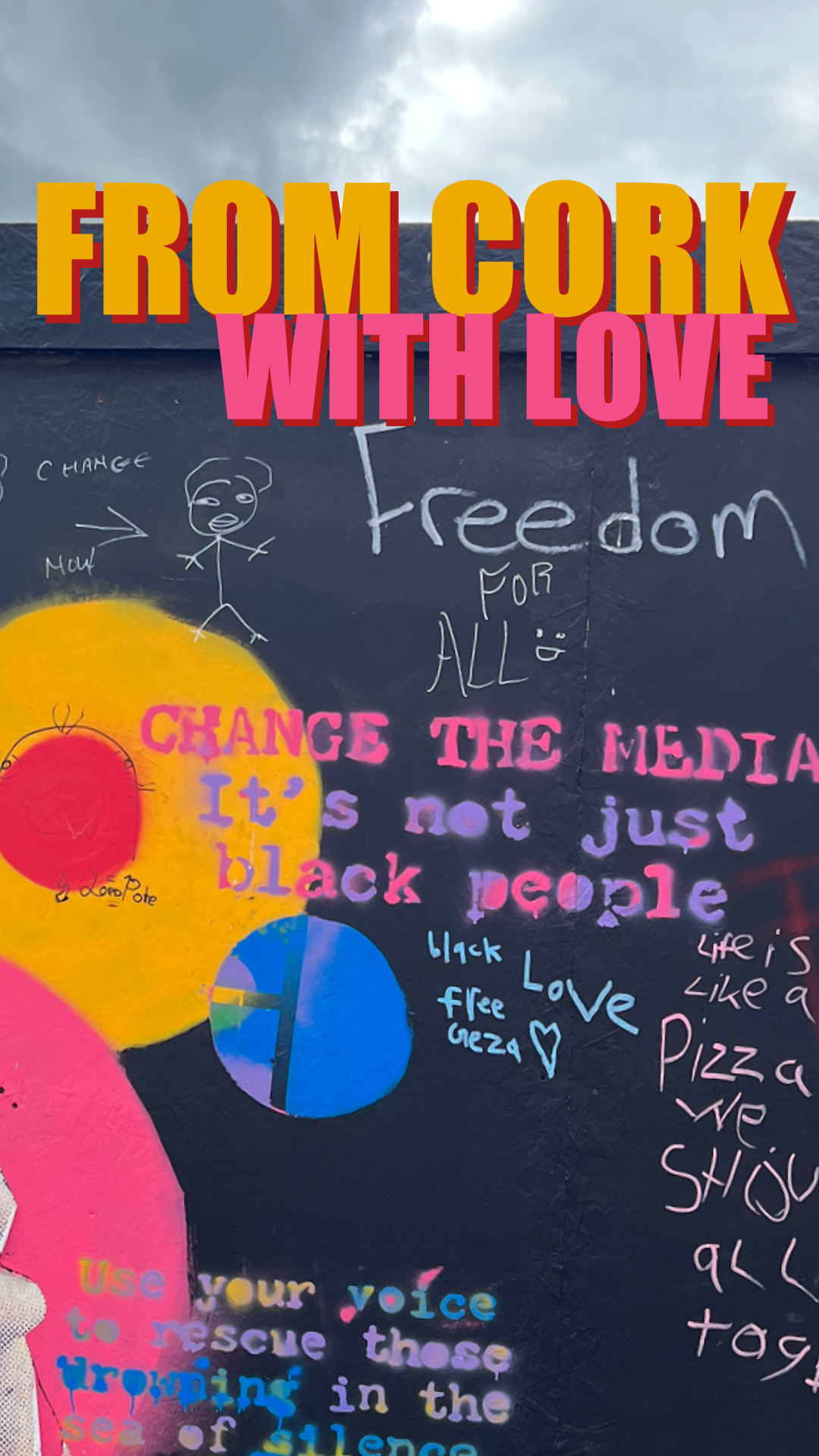
After audio training workshops during the summer 2025, we worked together to bring some of the stories they cared about to an Irish audience.
+ interviews by Raphael Olympio of Sauti (‘voice for the voiceless’ in Swahili) a group working with young people to tackle racism and build community through the arts.
+ blends live footage from demos, poetry, and interviews about ‘Storm In A Teacup’ a play set in a Direct Provision centre that explores migration as a spiritual transition with themes of identity, power & resilience.
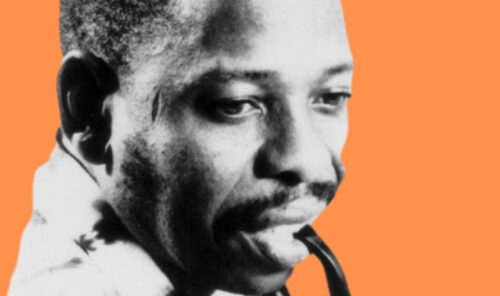
+ organisers of Cork Congo Solidarity on the assasination of Patrice Lumumba by the USA & Belgium and how western companies are driving the genocide in Congo.
‘We really need to take a moment and just put ourselves in other people’s shoes. You’ll never understand something until you pause and you put yourself in their shoes and listen.’ – Neo Gilson
Poetry by Isabel Sibanda, Emmanuella and Ebeneezer.
Music: Josie Flood
‘From Cork With Love’ radio documentary is funded by Coimisiún na Meán under the Sound and Vision Scheme.

More from Transcontinental (Caroline Mudingo Dipanda)
From Cork With Love – Transcript
Bairbre Flood: This program is a bit of an experiment. I wondered what it’d be like to train up people to make radio documentary and to see what they’d like to highlight themselves. It’s not a revolutionary idea, and yet most of our media is created in a parachute journalism kind of way. And if there are migrant or refugee stories, they’re very often by people who have no direct lived experience of seeking refuge.
Bairbre Flood: Is that important? Does our lived experience frame how we view events, how we view politics, how we relate to each other, the way we tell stories to other people? Maybe we listen and watch and read our media and our social media in a cocoon, a blank white cocoon.
Isobel Sibanda: Although right now I feel like I know my identity of I can see my journey and I can see my purpose, but that was never the case when I first came.
Isobel Sibanda: I was really lost. I didn’t feel like I belonged. There were so many situations where I was really sad and I didn’t feel like I could express myself or be the Isabel that I was when I was like eight.
Neo Gilson: We really need to take a moment and just put yourself in other people’s shoes. You’ll never understand something until you pause and you put yourself in their shoes and listen.
Mark Mavembu: Everybody has heard of Palestine and what’s happening there, but all people don’t know what’s happening in Congo, in Sudan and in some of these other countries, and we want to put it all together and fight for the same fight.
Bairbre Flood: We did some media training with people who’ve chosen Ireland and specifically Cork as their home. The process wasn’t perfect and there are so many more voices we could have included. And so many more viewpoints we could have shared. But for now, I’m really happy to bring you these postcards, the stories they want to tell you.
Bairbre Flood: From Cork with Love,
MUSIC
Bairbre Flood: musician and Occupational therapist, Raphael Olympio is a youth mentor with Saudi, a name that means voice for the voiceless in Swahili. Saudi work with young people in Cork to tackle racism and build community through the arts. They’re an amazing group of musicians and writers. They set up the first youth led anti-racism conference in City Hall and Cork, and they do workshops, social events, and training with the young people.
Isobel Sibanda: My name is Isabelle Ban, and I am from Zimbabwe.
Bairbre Flood: Raphael speaks to Isabelle Zaban.
Isobel Sibanda: I am a third year commerce student in UCC. I have two younger sisters that I love so, so much, and I have an older brother that I look up to and I would see myself as someone that’s very loving, someone that loves people, and that’s what motivates me.
Isobel Sibanda: To be the best that I can be. And that’s what I feel is my purpose and what I wanna spread. I love to volunteer and I love to involve myself in as many initiatives as I can that push me outside of my comfort zone and that I can look back on and be proud of myself.
Raphael Olympio: Perfect. So speaking about initiatives.
Raphael Olympio: You are running for Miss Africa Ireland. Could you tell me a little bit about that?
Isobel Sibanda: Yes, so it’s miss the next African Queen in Ireland and it’s been going on for two years now. And this is the second year. I saw an advertisement for it on Instagram and I decided I’m just gonna take the leap of faith and I’m gonna apply and see where it goes.
Isobel Sibanda: And I went for the interviews and it went well, and I got in. I am currently a finalist. And this has been an amazing journey for me because again, it’s allowed me to step outside of my comfort zone to do things that I would’ve never done otherwise. And also, it’s given me the platform to be able to do what I love, to be able to have an audience that has listened to my story, that understands me and my journey, and I can learn from my experiences.
Isobel Sibanda: And. Here, whatever I have to say, that might mean something to them. And also it celebrates the African culture as well, and it shines a light on us and to make us seen and just to make the world know in Ireland specially that we are special and that, we all have dreams and there are platforms out there that want to see us shine and succeed in what we love.
Raphael Olympio: Amazing. So you mentioned that you saw a post for the running of Miss Africa, Ireland. And you touched on it a little bit, but what made you personally say, I’m going for this?
Isobel Sibanda: I think one of the big reasons is I have been through a bit of a difficult journey in Ireland. When I was younger, I was extremely extroverted.
Isobel Sibanda: I, I loved modeling, I loved fashion. I was comfortable in where I was. But when I moved to Ireland, I lost my identity. I, my environment was completely different to what I was used to, and that made me go into my shell. So this opportunity was a way for me to bring that younger self of mine out and to express her and not hide her away.
Isobel Sibanda: And I also feel like, I always try to inspire my younger sisters. I always give them advice. I always give them lectures because I love them and I wanna see them succeed. And I’ve seen how beneficial that has been in their lives. And I just wanted to see myself as that older sister to other younger.
Isobel Sibanda: Girls out there who might not have mentors, who might not have older sisters, who might not have a parental figure that’s there to motivate them. And so I wanted to be that person to other youth as well that might need that kind of push, that might need that inspiration. And it’s difficult sometimes to go for it, you have.
Isobel Sibanda: Insecurities. You have a voice inside of you telling you that you might not be good enough. Or I’ll apply next year. And if we listen to that, we’ll never get to where we want to be. But I want to be that inspiration to show the youth that, God gave you that talent for a reason. And I got this platform because I chose to take that leap.
Isobel Sibanda: I chose to listen to my gut and. Now I’m able to speak to them and now I’m able to be an inspiration. And that if they followed their own passions, they would get to a place where they would be an inspiration to others as well. And that it is important for them to listen to it because it will take them to a place that they might not have even dreamt of.
Raphael Olympio: You sound like the type of influencer that this society needs which is amazing. So you’re running for this. Pageant, and I wish you all the best, but talk to me more about your creative side. Apparently you do a bit of poetry. Could you talk to me about that? How did you dabble into poetry?
Raphael Olympio: What influenced your poetry and why poetry?
Isobel Sibanda: Everything I do is always written down on my diaries. I have eight of them from when I was 12, so it made sense that I wanted to use them in a way. That says my story and could combine all the things that have happened to me into one. And poetry was the best way because I could sum everything that I experienced into one.
Isobel Sibanda: And yeah, it just felt like it flowed and I was speaking from the heart. And I could be creative with the words and I could tell a story, but also invoke emotion. From what I felt in those times when I was going through what I did. And so yeah, that’s just the journey that I’m on right now. It’s a new discovery, but I’ve been really enjoying it and yeah, it’s been a lot of fun and I can’t wait to create more.
Isobel Sibanda: Although right now I feel like I’ve I know my identity of, I can see my journey and I can see my purpose, but that was never the case. When I first came, I was really lost. I didn’t feel like I belonged. There were so many situations where I was really sad and I didn’t feel like I, I could express myself or be the Isabel that I was when I was like eight, very confident pursuing her dreams. So I, I had to create mechanisms for myself to, basically survive and to come out and smile on the other side. And this poem is it shows all of that. And yeah, it was difficult.
Isobel Sibanda: Do understand that there are other younger people out there who are going through the same thing, but I don’t feel like it’s talked about or it’s something that we just. Keep inside ourselves and no one knows really. ’cause for me it stayed in my journals. But 12 is a way for me to be like, no, there are other people out there that can relate to this and I wanna show them how I went about it.
MUSIC
Isobel Sibanda: I was 12 when I touched the Irish soil. A suitcase full of questions, an accent heavy with home, a hard light, but trembling in the classroom, I became silent. Every laugh I didn’t understand chipped away at my confidence. I try to fold myself small to sound like them, to fit into spaces, never shaped for me.
Isobel Sibanda: So I watched, I listened. I studied the rhythm of the room, learned when to speak and when to shrink, and slowly I shifted, not because I lost myself, but because I was learning to move between worlds, shape shifting to align with opportunity. To rise with the tide I had been thrown into and each moment of discomfort molded me, raised me into the woman that I am now, but I wasn’t alone.
Isobel Sibanda: There was always my mom and the warmth of my African community, the smell of home in the food. The music that knew my name and the aunties that saw me before I saw myself. They were my cushion, my compass, the place I turned to when the world felt too cold to belong to. Now I carry all of it, the silence, the strength, the shifting, and the soul.
Isobel Sibanda: And I rise, not just for me. But to be the light that I needed at 12 to show my younger sisters that soft can be strong, that wisdom can come from wounds and that we are never far from home when we know who we are.
MUSIC
Isobel Sibanda: As I explained in the poem, I had to learn the new environment that I was in, and I found ways to. Ways to adapt and ways to open myself up to carry that confidence so that I can pursue my dream, so that I can be that younger creative side of me again, that knew what she wanted, that knew what her dreams were.
Isobel Sibanda: And I want others as well, who had, ’cause we all have dreams when we’re younger. I want everyone that has their dreams to express them and to follow them, even though they might be in a position right now where they feel like they can’t. But I am here to show them that they can follow their dreams and that there are organizations, there are people that are out there to listen, and I am one of them, and I just want them to see that and I want them to feel that, and I want them to succeed as well, like I did.
Raphael Olympio: Amazing. So my last question for you is if you could share any piece of advice to the younger generation or the youths that you love to work with or would like to work with in future, what message would you send them or what message would you give to them?
Isobel Sibanda: The advice that I would give to them is to always take the leap of faith because it’s, it is scary to be honest.
Isobel Sibanda: Because again, you have your insecurities, you have doubts, people might not believe in you. You might feel like I can’t do it, or the circumstances don’t allow me, or maybe I’ll do it in the future. But I think no, like now is the perfect time. You have that gift for a reason, and it’s meant to be a blessing to others.
Isobel Sibanda: And I would tell them that, just go for it. That if there’s any opportunity that comes your way, go for it. And even if there isn’t, try and create one for yourself. Put yourself out there and you just never know The people that want to listen to you, that want to be there for you, and opportunities will find you if you put yourself out there and you’ll never fail with that, and you won’t go wrong, and you’ll be extremely proud of yourself.
Isobel Sibanda: Even if it doesn’t work out. You still learn something at the end and you still are a better person than you would’ve been if you had never taken that opportunity in the first place.
Raphael Olympio: Amazing. Thank you for that. Thank you.
Isobel Sibanda: Thank you.
Ebeneezer: My name’s Ebenezer, and I’m from Congo. My poem is about Congolese culture and Congo’s heart, where river waves. The dancers ignite where the spirits Clive rhyme plus vibrant vines. A culture esses, pure and plain feed pound the earth and timeless beat voices rise and souls reheat. In every step, a story is told of ancestors, pride and legacies.
Bold.
Ebeneezer: There’s so many different type of animals, culture, food, and this what, this is what makes Congo, what it is, the resources, and also it’s going through genocide right now. So yeah, I just wanted to put that out there too.
MUSIC
Bairbre Flood: Ebenezer was one of the young people with Saudi, and again when talking to the young people there, the Democratic Republic of Congo kept coming up. Not surprising when along with Palestine and Sudan, the Democratic Republic of Congo is suffering terribly from the effects of modern colonialism.
Bairbre Flood: One of the women with our media training group on Anci talks to one of the organizers of a protesting cork in solidarity with the DRC.
Elykia: My name is Elykia. I moved here six years ago. I go to college currently to do illustrations. I like anything that has to do arts, whether I be dancing, singing, craft. I love it so much. And I am very much I see a person who cares about others as in what’s happening around the world.
Elykia: Like homeless people, like queer people, like other immigrants.
Elykia: My grandmother moved to Belgium and then raised her kids there, and then my mother raised me there. But my family is in fact Congolese. It’s talked about really little because no one cares when something happens. Africa.
Demo: How many children have to die before you call a genocide? How many children have to die before you call a genocide?
Elykia: So I am a group of Congo and Palestine solidarity. We’re Irish people showing so much solidarity with Palestinians. And I would love if Irish people could do the exact thing for Congo.
Bairbre Flood: The Democratic Republic of the Congo, DRC accounts for around 70% of the total production of Cobalt in the world, and 60 to 70% of its coltan.
Bairbre Flood: Coltan is essential for our mobile phones and our laptops.
Elykia: What is happening in my country is more than unfair and comes from the history of slavery and anti-blackness and the mistreatment of black bodies.
Elykia: That we don’t deserve this. And I’m so happy to have been able to organize this and to have all of you here today. It’s a small group, but it’s gonna get bigger as we keep going. And I hope to see you again here next Sunday or whichever day of the week we organize this. Thank you so much, everybody.
Elykia: Which is very similar to how it was like back during Leopold’s ring on Congo, where he was cutting off hands of Congolese people when they weren’t meeting like. Book that they had to
Demo: Power to the people. Power to the Congo!
MUSIC
Bairbre Flood: Artist activist and youth mentor, Fionnuala O’Connell also read her poem To the creators of Empires.
Fionnuala O’Connell: To the creators of Empires.
Fionnuala O’Connell: Where is the kingdom you’re protecting brother? Where is it behind you? Laser ruin. You have stepped on everyone you have ever loved to be the tallest. What are you reaching for brother? You have burned the pillars that have protected you and the roof, which house you and you could not go home, has collapsed with it.
Fionnuala O’Connell: You have eroded the earth that balance you, that life you that nourishes you. Where is the kingdom? Your protective brother? Where is it? You have compromised your heritage. You have sacrificed your humanity for what? Where is the kingdom behind you? Lay a ruin. You clinging to the idea of wealth, the entitlement of material wealth, and you hold it against your body like a cloth to a bloody wound.
Fionnuala O’Connell: You have given all parts of you brother. You look down on others and dismiss their pain because it is not your pain. Your pain is unique and you deserve more. You stand on the mountain of ruins looking out to sea with a grenade in your hand. What are you fighting for, brother?
Joe Moore: I dunno if everybody here is aware of Roger Casement
Bairbre Flood: Joe Moore of Anti Deportation Ireland talks about the historical link between the Congo and Irish revolutionary. Roger Casement.
Joe Moore: working with the British Colonial Office, sent to the Congo and was one of the force to expose the genocide that was happening there and as a result of what he saw in the Amazon and the Congo.
Joe Moore: He came to realize what was happening in Ireland under British colonialism. British imperialism. He became a revolutionary. People might know he was arrested at Banna Strand in Kerry. Good Friday, 1916, taken to London, and in August he was hanged in Pentonville prison.
The Congo isn’t alone, a standalone, and neither are we, and we have power here to do something about it.
MUSIC
Mark Mavembu: I think the Congos place and role in the world, it’s the provider of a lot of minerals like cobalt which is, and Colton, which is used as well as copper and tin and gold but mainly cobalt and Colton, which is used for phones, batteries and a lot of global texts.
Bairbre Flood: Mark Mavembu, musician and youth mentor with Sauti..
Mark Mavembu: The whole world kind of benefits from the materials in the Congo. It’s over 50% of the world’s Cobalt is in the Congo. So that’s its role in a global scale and the way, obviously more kind of tech companies. Come to fruition, then it just means that more and more cobalt is needed to meet the demands.
MUSIC
Mark Mavembu: Yeah. So the extraction of this material has impacted the Congolese population terribly. Obviously, if you look at the M 23, which a lot of people think Rwanda is funding, basically rebel groups that go into the Congo cause conflicts in areas near rich minerals. And so while this conflict is happening on the side, these, companies are taking and stealing material and minerals and bringing it to Rwanda and other neighboring countries and then selling it to other companies who are selling it to big companies.
Mark Mavembu: Almost creating this like filter. Of oh, this big company doesn’t buy it through child labor. No. They only buy it from a company that buys it from a company that uses child labors. And obviously the child labors the wars, the conflict the raping and the pillaging and all of these things is how the population of the Congo are impacted by the teething and the greediness of, a lot of western companies and even some neighboring countries when it comes to materials in the Congo.
Mark Mavembu: But if we look at the history of the Congo, when we got our independence in the 1960s, I believe, if you look back at it in 1960, to be exact, if you look back at it we had Patrice Lumumba, who was the prime minister who wanted reparations and was fighting to ’cause obviously Belgium benefited greatly and a lot of European countries benefited greatly from conquering the Congo.
Mark Mavembu: Splitting it up, even Portugal took Angola. Which was all kind of Zaire and then the Belgians also split Congo Kinsa and Congo Brazil because they thought – copper in Congo brazil. If they can utilize that. And make the country smaller, it’s easier for them to steal from and to work with them and continue to benefit from it.
Mark Mavembu: And the West’s role like Lumumba, America helped assassinate Patrice Lumumba with the CIA and the Belgians to put a dictator in charge who killed millions in Mobutu. And, they killed millions and millions. And then eventually a civil war had to occur in order to free the Congo from Mobutu’s Rule, who was a strong man backed by the Western powers.
Mark Mavembu: And the reason why they chose him was because he was willing to work with the west and give them mining access to gold and to copper and to diamonds, and to all the minerals that we had and. Bloodshed, of course was the result because he wasn’t doing he had his own airport.
Mark Mavembu: Basically in front of his house. He was living like he’s in the best country in the world, while the whole country was starving and bleeding and struggling. So the West has always played a major role. And obviously recently because of cobalt and electric cars and these green, they call it greener world is at the cost of lives, it’s at the cost of bloodshed. It’s at the cost of millions of people getting displaced. And it’s, it’s just the unfortunate reality of it. The west is still playing a major role. ’cause again, where do these rebels get no guns?
Mark Mavembu: Where do they get no backings? So it’s, I suppose that’s really the situation. And Thero the West’s involvement in the whole conflict.
Mark Mavembu: And we got in talking to the Palestine protests the housing protest, and we’re gonna be doing kind of combined protests because obviously at this day and age in time, everybody has heard of Palestine and what’s happening there. But all the people don’t know what’s happening in Congo, in Sudan, and in some of these other countries. And we want to put it all together and fight for the same fight.
MUSIC
Mark Mavembu: This was a reality for the people of the Congo. Millions murdered and history has kept it as quiet as possible. Lumumba attempted to stand against the West and demand true freedom. And the CIA, with the help of the Belgium government assassinated and killed, murdered him and buried him out in the woods.
Mark Mavembu: They placed a leader in TU, who went ahead and slaughtered 6 million Congolese people, A result, a direct result of Western meddling in Africa and the Congo. This type of meddling is what has kept Africa from rising and moving forward. The same meddling that continues today. Armed groups and proxy forces fight over mines that feed our phones, our cars, weapons, diamonds, and so much more.
Mark Mavembu: M 23 continue to run rampant at the cost of civilian lives and commit atrocities. Why? This is the question we must ask ourselves. The mineral roots are the arteries of the violence. Carlton and Oars continue to leave rebel hell zones and are sold to who? The West. These ores somehow end up in neighboring nations and the corporations and infrastructures of the West benefit, and you ask them how do they receive these materials?
Mark Mavembu: They say ethically. And today we’re here to break the silence and the complicity of the west and the world as they stand. Silence as kids, children, men, women are pillaged, destroyed, displaced, raped. All for what? For profit. For money.
MUSIC
Mark Mavembu: For the Congo protests, we’re hoping to do another one every month. So we’re hoping to do another one soon. It is just a matter of planning and timing and getting the research done and ensuring that what we’re saying is based upon research and, and testimonies and so we’re just hoping to keep doing that and then to work with the other protestors as well.
Mark Mavembu: To do bigger protests so that more and more people are aware of the situation and hopefully we can get some action from the eu, the un instead of just the usual reportings and of washing their hands from it and saying, oh, it’s Rwanda and it’s the country’s nearby. It’s nothing to do with us. We want actual accountability and change in, in, in the whole system of how they receive these materials and minerals so that the countries that they receive it from can actually improve instead of continuously being gutted for the resources.
Emanuella: My name is Emmanuel.
Young Kids With Old Minds, the world doesn’t show a sign. Guns in their hand. Congo, O Congo. Why is there so much sorrow? Arrows in Innocence Hearts, Congo o Congo. Do we really deserve genocide? Or more like does innocent kids have to go to war when they would love to go to a toy store?
Emanuella: Congo o Congo, save us from the sorrow so kids can go out to play Congo o Congo. Save us from the sorrow.
MUSIC
Bairbre Flood: Emmanuella, one of the young people in Sauti and her poem, the Congo.
MUSIC
Bairbre Flood: Storm in a teacup is a play set in a direct provision center and was performed in the Risco Arts Center in Cork, written by poet Neil Gilson. The play, as she describes it, explores migration as a spiritual transition with themes of identity, power, and resilience. Neo talks to one of the actors who performed in her play – Nomalanga Gloria Zulu,
Neo Gilson: Nomalanga. What parts of the play spoke to you? What parts of the play connected with you and why?
Nomalanga Goria Zulu: I think my connection was when I was the part that I played about the mom because. I’ve learned that in the direct provision, you have to be a mom to everybody, so you have to forget who you are. You just need to be there to support one another.
Nomalanga Goria Zulu: So I got that connection because the part that I portrayed was a mother who was supportive to a young girl
Neo Gilson: during the performance, the actual reading. Did you feel connected with the audience? Are you able to tell me how was it like reading a script to a live audience in Ireland?
Nomalanga Goria Zulu: Wow, that’s a good one. I think the interaction that I had that was good and still in my mind is whereby. I, the feeling that I had, it’s when I was delivering the story to them and having people that are listening to me, because I think it was a good chance for us to voice what we are going through in the direct provision.
Nomalanga Goria Zulu: So that was a part that I enjoyed the most because they were listening to what, because most of the people, they don’t know what is happening.
Neo Gilson: Very well. What are your thoughts on migration, on being a refugee and what is happening now?
Nomalanga Goria Zulu: I will say some, somehow it’s a. I’m confused because when I arrived I was running away from what I was facing in South Africa thinking that I’ll be safe in Ireland. I am safe, but it’s sad. In the script that I’m not free. I am not free. I don’t wanna lie, and I don’t wanna buy any face or maybe pretending that it’s safe, I’m not safe because you go in the bus, you’ll be treated like, and it started in the direct provision that we felt that there was a, I will take it. There was a racism because you will go there, people will be treated differently. So that was a huge to me, and I’m glad that I went. I was part of the script that was written by NE to Voice and tell the people what we are going through in the direct provision.
Neo Gilson: What was the funniest part? Of doing the play reading. Is there any enjoyable moments?
Nomalanga Goria Zulu: I enjoyed it from the first when I was on stage, because that was my first stage being there in Ireland and acting because I used to act. I started acting at the age of nine, but now since I ended up in South Africa, to be an actress I was thinking that I will be given a chance, and now what? It took me out from the box that I was in.
Nomalanga Goria Zulu: Put me on sport whereby I had to get that feeling again that Gloria, you’re still an actress. So that was very fun for me because I missed it for so many years and thanks to me
Neo Gilson: we’ll pass the message through to Mel. What was the biggest challenge with this role? Is there something new that you learned while you were.
Neo Gilson: I know that you, from what you’ve said, you have rotate, played various roles in various production, but this specific role is there anything new that you learned or what was the biggest challenge?
Nomalanga Goria Zulu: Yeah, I’ll say I did have a, I did had a big challenge, sorry. The challenge was, am I not going to spoil my stay in Ireland by voicing?
Nomalanga Goria Zulu: The page, was it fear? Yeah, it was a fear because I was asking myself that, am I not going to be the target to say she was saying this and this on stage, so she might be the target. Because every time you are afraid not to tap on something that you are not allowed to. But I don’t wanna lie about.
Nomalanga Goria Zulu: I was scared to portray the party, but at some stage I was saying that, Gloria, you have to be your own advocate. And then I had to stand up and say, let me swallow that fear and reach out and tell the whole world of Ireland, how we are being treated in the Direct Provision.
Neo Gilson: How long did you rehearse for the part?
Nomalanga Goria Zulu: It took me a little. I didn’t even struggle because I’ve been an actress. I just did it, like just fast. So it wasn’t a challenge. It was a challenge, although, because it’s my first production that I did in Ireland, but the mind did recover first to say, Gloria, you’ve been there, you can do this.
Nomalanga Goria Zulu: And then I had to just to take the fear. Or maybe the doubts about Gloria and then I did it. Even it was like, here we are. We give it to you. Yeah.
Neo Gilson: Thank you so much for sharing your thoughts with us about this play.
Nomalanga Goria Zulu: You are welcome. Thank you.
MUSIC
Bairbre Flood: Neo continues to talk more about her play to Caroline Mudingo Dipanda, who asks her what her creative process was in working with the actors.
Neo Gilson: Luckily for me the cast they have been. They have been exposed to, to, to theater, to storytelling, to music and to television. And for me to get them into the three creative, to explore the creative process with them was to discuss the themes of the. It was also just to touch base with them personally because they’ve got lived experience.
Neo Gilson: That was very intentional of me to get people that have got loved experience of direct provision. So was to touch base with them to just check if they’re not triggered. By the contents of the play, by the storyline. And also just to discuss what they were comfortable with, what were their fears and also explore the direction, the creative direction that we were going to take regarding this play.
Neo Gilson: Migration is not going to go away. As much as we want to just close our eyes and think that it’ll disappear. It has been there historically, even in biblical times. Will always migrate because of the conditions of the state of affairs globally, in, in various nations. The turmoil that is happening politically, the political unrest, the climate change, the war.
Neo Gilson: So I think my migration, it’s an issue. That needs us to, to really have that ongoing discourse discussion about it. And if we, we can just have an understanding that humanity, we need one another, no one is lesser or above the other. Together we can find solutions and have that empathy and compassion and love and tolerance.
Neo Gilson: The biggest lesson from the play is that we really need to take a moment and just put yourself in other people’s shoes. You will never understand something until you, you pause and you put yourself in their shoes and listen to the plight of humanity’s. Just the key theme is that humanity we need each other to survive.
Neo Gilson: We don’t know the flip side of the coin. You know what will happen? You know who, I come from South Africa. I never once thought that I would be somewhere around the world, detached from everything that I know, my home country, my culture, my people, the food and seeking, so we never know what can happen in our country.
Neo Gilson: So we, we need to just take a pause, reflect, and just get back to that point of humanity, that says that we are the same. Our blood is red. The blood that flows in our veins is red, it’s one color. Our organs are the same. We breathe the same oxygen. There’s no oxygen for this class and a different oxygen for the next class or group of people.
Neo Gilson: So we need each other to survive. I need you, you need me, let’s work together. There was a song by Ray Perry, Luke, listen and decide, when you are alive you always have to keep looking and listening. And for artists, that is the process. Keep your ear to the ground, connect with your community, and then connect with yourself, connect with God, and from all of that, you will be able to create something.
Neo Gilson: So those are my future plans. I cannot say much now, but I’m just trusting God with the process.
MUSIC
Bairbre Flood: This program was produced by myself, Bairbre Flood, and Caroline Mudingo Dipanda. Caroline also hosts a regular show on Eist, a local cork station, and her show focuses on Afro Irish diasporic artists.
Bairbre Flood: Thanks to all the people who participated in the radio training and who talked to us for this program, especially to Raphael Olympio, Isabel Sibanda, Elykia, Onineechi, Mark Mavemmbu, Neo Gilson, and Nomalanga Gloria Zulu. Also thanks to Joe Moore and Fionnuala O’Connell. And Ebenezer and Emmanuella for their words and poetry.
Bairbre Flood: And to Josie Flood who created all the music throughout this program. Apart from this one is from an event we held in Cork, in the Laneway Gallery, on Shandon Street, and a live performance from the young people in Sauti. Thanks for listening.
MUSIC
MUSIC [song by Sauti]: I don’t care if the negativity is beside me. What do we want? Change
We want now, what do we want? Change When do we want it? Now. What do we want? Change. When do we want it? Now! What do we want? Change! When do we want it? Now!